History
Audlem Public Hall has served the community for over 120 years. From its origins as a commercial venture in 1904, through two world wars and beyond, the Hall remains at the heart of village life.
The Early Years (1904–1939)
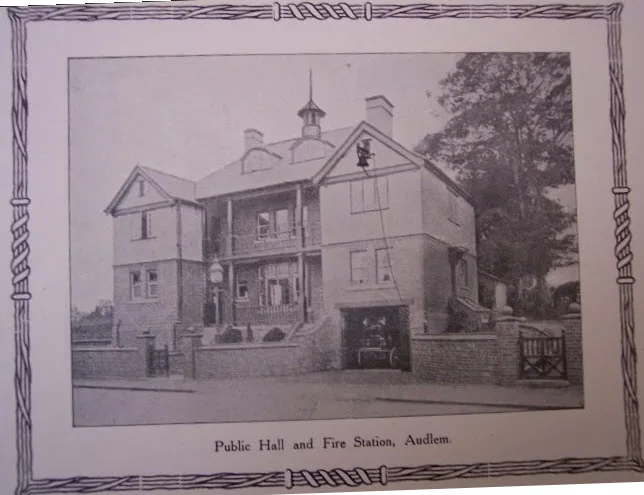
The Hall was built in 1904 as a commercial venture by three partners — two local businessmen and Greenhall Whitley, owners of the Crown Hotel — who together formed The Audlem Public Hall Company Limited.
Tenders were advertised in the Manchester Courier in May 1904. By December the Wellington Journal reported the Hall was already in use for "Baptists' tea and entertainment". It was officially opened in 1908 by the Duchess of Westminster.
The Opening Ceremony ran for three days with admission at 2/-, 1/- and 6d. It raised funds for the local school "in order to meet the requirements of the Board of Education". The programme noted: "The Stallholders prefer Bank Notes. Change will be given if greatly desired".
Early activities included dancing lessons, auction sales, badminton, cinema shows, snooker and a baby clinic known as "Children's Welfare" — many of which continue in the Hall today. The building also housed the village horse-drawn fire engine; volunteer firemen were summoned by a large bell at the top of the building. The garage doors are still painted fire-engine red in recognition of this role.
Notable events
- 1927 — A fire in the cinema projection box when celluloid film met the gas-powered projector light
- 1930 — Hall switched to oil lamps after the local gas works closed
- 1933 — Electricity and water connected
- 1938 — The company was wound up, unable to continue trading. A covenant from Greenhall Whitley prohibiting alcohol sales had not helped
A New Beginning (1939–2001)
Liquidation brought new life. The Hall was sold for six hundred pounds to four local Trustees, and management was taken over by an elected Committee with representatives from the Parochial Church Council, the Ancient Order of Foresters, the Oddfellows, the British Legion and the Women's Institute.
The Hall was registered with the Charity Commissioners on 1st May 1939 — four months before the outbreak of the Second World War. During wartime it served as a rest centre for the Home Guard and Fire Brigade, and hosted socials, dances and even concerts given by locally stationed German POWs. "Permanent lavatories" arrived in 1945, just in time for the Grand Victory Concert Party in 1946.
Modernisation
- 1970s — Kitchen added; alcohol restriction lifted, enabling a temporary bar
- 1979 — Complete rewiring (cost: £1,720, with a £750 grant from the Parish Council)
- 1982 — New kitchen built thanks to local entrepreneur Harold Buckley; main entrance moved to the car park side
- 1989 — Registered as Charity No. 519458
By the late 1990s, income barely covered running costs. The Disability Discrimination Act threatened the Hall's future. A public meeting in April 1998 presented five options — from "do nothing" to "close and sell". The overwhelming vote was to redevelop.
Plans were drawn up and approved in 2000, but costs had risen from £325,000 to over £500,000. A National Lottery funding bid was rejected in 2001.
Repairs and Renewal (2002–2015)
With a major rebuild off the table, the Committee took a pragmatic approach: fix and improve what was there. Over 13 years, more than £155,000 was raised through fundraising and grants:
- 2002 — Complete rewiring
- 2003 — Roof retiled
- 2004 — New disabled-access toilets and storage
- 2005 — Main Hall floor restored to original condition
- 2006 — Double glazing throughout, retaining the leaded lights
- 2007 — Kitchen re-equipped to professional standards
- 2009 — New bar and stairlift installed
- 2010 — Front wall and Cheshire Street steps rebuilt
- 2012 — New oil boiler and storage tank
- 2015 — Stage entirely rebuilt with understage storage
Throughout this period, Chairman Geoff Stretch and his wife Olive cleaned and maintained the Hall without charge — after the Committee had decided to rent out the Caretaker's accommodation. Their contribution, combined with the improvements, increased bookings and transformed the Hall's finances.
The Annexe (2013–2017)
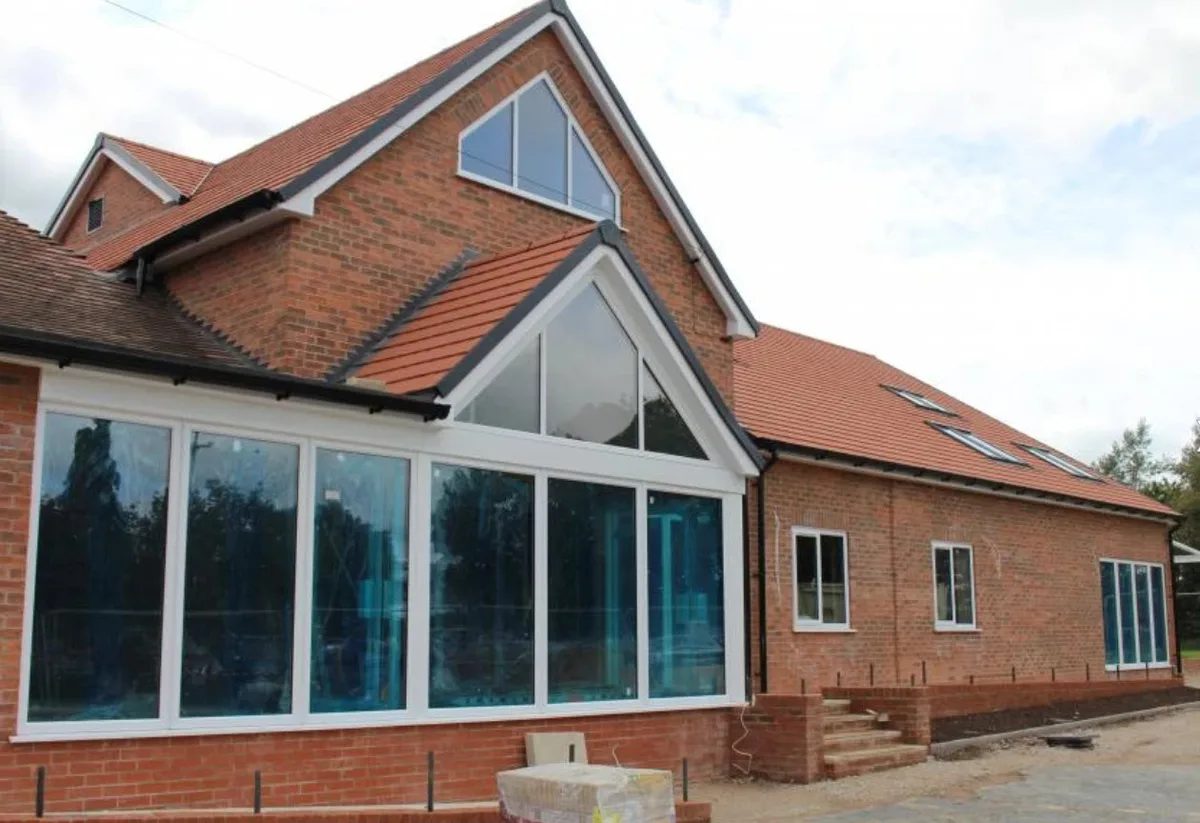
Parish Plans in 2005 and 2010 highlighted the need for better sport and youth facilities. After earlier schemes fell through, a new committee — APHAx — was formed in February 2013, drawing members from ADCA, Audlem FC, the 5As Drama Group, the Public Hall, the Parish Council and youth volunteers.
Architect Arron Crick produced an initial design costing £614,000: a small hall, changing rooms, a seniors' lounge, a youth club room, and drama storage. The project evolved through competitive tendering and several redesigns before a final Big Lottery Fund bid was submitted in November 2015 — two folders, 28,731 words over 101 pages.
Approval came in March 2016. Sneyd Building Contractors of Stoke-on-Trent started work on 7th November 2016, completing exactly one year later.
The cost
| Cost | |
|---|---|
| Purchase of land from Cheshire East | £1 |
| Feasibility and planning | £16,807 |
| Construction (incl. architect's fees) | £689,000 |
| Legal fees | £7,650 |
| Furniture, fittings and equipment | £34,000 |
| Total | £747,458 |
Who paid for it?
| Amount | |
|---|---|
| Big Lottery Fund (feasibility) | £16,807 |
| Big Lottery Fund (construction) | £616,514 |
| Homes and Community Agency | £21,258 |
| Parish Councils (Audlem, Buerton & Hankelow) | £22,650 |
| Cheshire East Council | £10,200 |
| Sport England | £10,000 |
| Other grants | £9,270 |
| Donations | £15,685 |
| Fundraising | £17,750 |
| Audlem Public Hall | £7,320 |
| Total | £747,458 |
The main entrance was also remodelled at a cost of £38,000 (funded entirely by the Public Hall) to improve disability access and connect the old building with the new Annexe.
The Grand Opening took place on 18th November 2017, with the ceremony performed by Sarah Callander Beckett, High Sheriff of Cheshire.